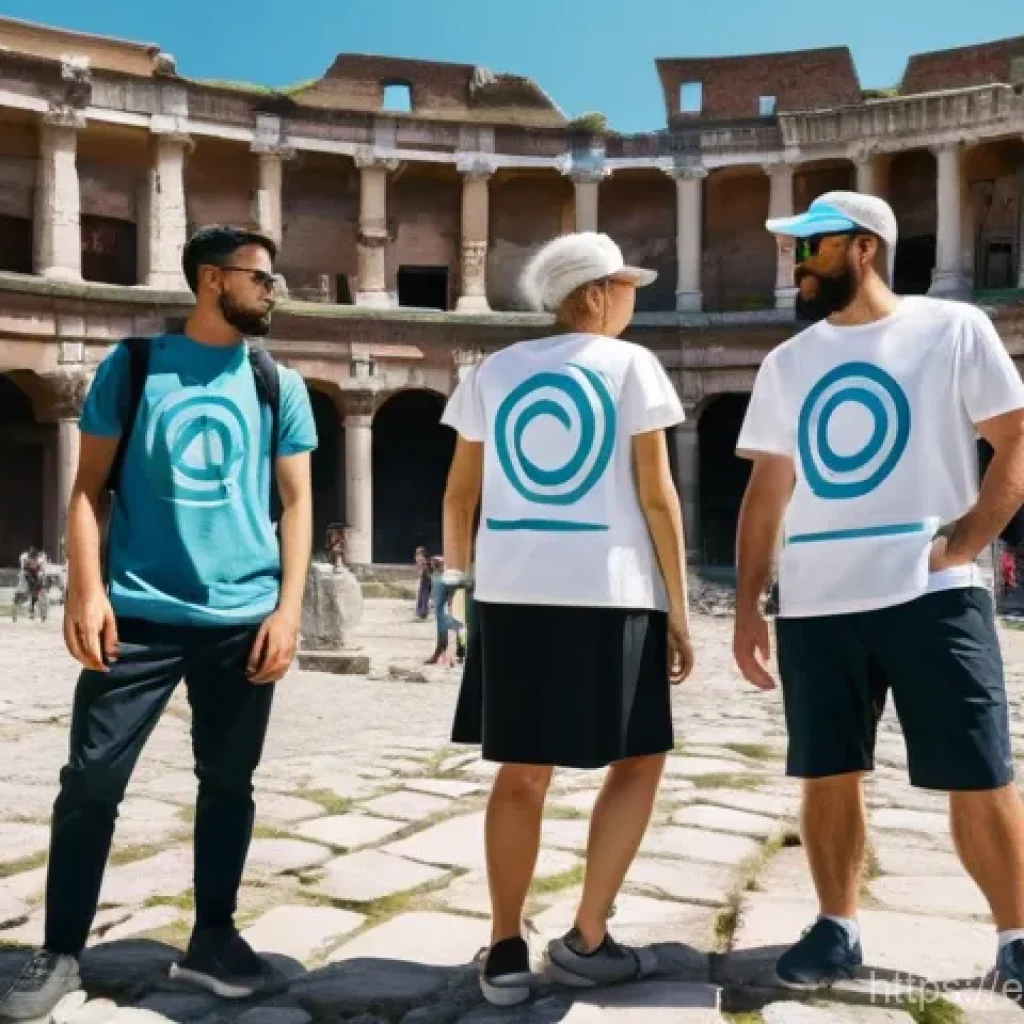
Remember flipping through glossy travel brochures, dreaming of far-off lands? Or perhaps you’ve felt that moment of awe standing before an ancient ruin, wishing you could truly step back in time and see it as it once was?
Well, get ready because a new era of exploration is here that literally brings history, culture, and adventure to life right before your eyes! Augmented Reality (AR) tourism is absolutely transforming how we explore, learn, and genuinely connect with destinations, making every trip richer and far more unforgettable.
It’s like having a personal guide and a magic window rolled into one, unlocking incredible experiences you never thought possible. Curious about how this groundbreaking tech is shaping your future adventures and what incredible secrets it holds?
Let’s dive right in and discover the fascinating world of AR tourism.
Unlocking Hidden Histories: Time Travel at Your Fingertips

Honestly, who hasn’t stood before an ancient ruin or a historical landmark and wished, just for a moment, that you could truly see it as it once was? I know I have countless times. That yearning to connect with the past on a deeper, more visceral level is precisely where Augmented Reality tourism shines brightest. Imagine strolling through the Roman Forum, not just seeing crumbling stones, but peering through your phone or a pair of AR glasses to witness gladiators training, senators debating, and citizens bustling about their daily lives, all overlaid onto the real-world scene. It’s not a movie; it’s right there, happening around you. This isn’t some far-fetched sci-fi dream anymore; it’s happening in places like Pompeii, where digital reconstructions bring vibrant frescoes and busy marketplaces back to life, helping you grasp the scale and grandeur in a way no static signpost ever could. I remember my first time experiencing something like this in a historical town in Europe, and it truly felt like I was peeking through a window into another era. The goosebumps were real, let me tell you. It transformed a simple sightseeing trip into an unforgettable journey through time, making the history feel incredibly immediate and personal, rather than something locked away in dusty old books.
Witnessing the Past, Live and In Color
The magic of AR allows us to peel back the layers of time, revealing what once was in stunning detail. Think about standing on the very spot where a pivotal historical event occurred, and through the lens of AR, you can almost see the figures, hear the sounds, and feel the atmosphere of that moment. It’s like a documentary unfolding around you, but you’re not just a passive observer; you’re right there, immersed in the narrative. This isn’t just about static overlays either; developers are creating dynamic, interactive experiences where you might “meet” historical characters who share their stories or participate in a digitally reconstructed ancient ritual. For me, it elevates a visit from merely looking at artifacts to actively engaging with the ghosts of the past, creating a connection that’s far more profound. It’s experiencing history, not just learning about it, and that makes all the difference.
From Ancient Ruins to Bustling Streets: Reimagining Heritage Sites
AR isn’t limited to grand, sweeping historical sites. It’s also revolutionizing how we interact with everyday heritage, like old city streets or once-vibrant neighborhoods. Imagine walking through an old district in London or New York, and your phone can overlay images of how those very streets looked a century ago, complete with horse-drawn carriages or iconic shop fronts that no longer exist. It makes the familiar suddenly feel new and full of untold stories. My cousin, who lives in Boston, told me about an app that shows Revolutionary War events unfolding right where they happened, and she said it completely changed her perspective on her own city. This innovative approach breathes new life into places we might otherwise pass by without a second thought, offering layers of discovery and making every corner a potential historical tableau. It’s a fantastic way to deepen appreciation for the hidden narratives woven into the very fabric of our urban landscapes.
Beyond the Brochure: Immersive Experiences Redefining Travel
Forget those glossy brochures with their perfectly staged photos that often feel a bit… well, generic. AR tourism is here to shake things up, moving us far beyond passive observation into a realm of truly immersive, interactive experiences. It’s about transforming a simple sightseeing tour into an adventure where you’re not just looking at a landmark, but actively engaging with its story, its ecosystem, or its culture in ways that were previously impossible. I’ve heard friends rave about AR tours in nature parks where they can identify plants and animals simply by pointing their device, or even see virtual dinosaurs roaming where they once did. This isn’t about replacing the real world; it’s about enriching it, adding layers of information, wonder, and interactivity that make every single moment feel fresh and exciting. It’s like turning the entire world into an open-world game, but with real-life rewards like unforgettable memories and deeper understanding.
Interactive Storytelling: Engaging All Your Senses
The beauty of AR in travel isn’t just about visual overlays; it’s about crafting rich narratives that captivate your imagination. Think of it as a personal, interactive documentary unfolding around you. Instead of just reading a plaque, you might find yourself virtually guided by a local legend recounting tales of their village, or see indigenous art come to life with animations and cultural explanations. My travel buddy, Sarah, recently told me about an AR art exhibit she experienced in a public park, where static sculptures transformed into moving, talking pieces that explained their history and meaning. She said it was absolutely captivating and made her feel a much stronger connection to the art. This kind of storytelling truly engages you, allowing you to not just observe, but to participate in the narrative of a place, making the experience deeply personal and utterly memorable. It’s a game-changer for cultural immersion.
Gamification and Discovery: Making Learning an Adventure
Who said learning couldn’t be fun? AR is brilliantly leveraging gamification to make discovery an exciting adventure, especially for families and younger travelers. Imagine a treasure hunt through a historical district, where clues are revealed through AR overlays, leading you to hidden gems and facts about the area. Or perhaps a challenge where you have to virtually “restore” a crumbling castle by solving puzzles that teach you about its architecture and history. I even heard about an AR safari game in a zoo that lets kids learn about animal habitats and behaviors by interacting with virtual versions of the creatures in their enclosures. This playful approach keeps visitors engaged for longer, encouraging exploration and curiosity, and transforming what might have been a dry educational trip into a thrilling quest. It’s a fantastic way to keep everyone, from kids to adults, entertained and learning without even realizing it.
Your Personal Digital Guide: Enhancing Every Step of the Journey
Let’s be real, navigating new places can be a bit daunting sometimes, especially in a foreign country. You’re juggling maps, trying to decipher street signs, and maybe even fumbling with a phrasebook. But what if all that information could seamlessly blend into your view of the real world? That’s the power of AR as your personal digital guide, making every step of your journey smoother, more informative, and far less stressful. It’s like having a knowledgeable local by your side, but one who can instantly provide you with context, directions, and even translations without ever interrupting your flow. I’ve found AR navigation apps incredibly helpful in bustling cities, pointing me to the best local coffee shops or showing me exactly where that tiny, hidden alley leads. It really helps you feel more confident and connected to your surroundings, empowering you to explore with greater ease and discover those off-the-beaten-path spots you might otherwise miss.
Navigating New Worlds with Contextual Overlays
The beauty of AR navigation goes far beyond simple turn-by-turn directions. Imagine walking down a street and seeing virtual arrows overlaid on the pavement, guiding you directly to your restaurant reservation, or having points of interest pop up on your screen as you approach them, telling you a little bit about that intriguing building or statue. It’s about contextual information appearing exactly when and where you need it, enriching your understanding of your surroundings in real-time. A friend of mine who’s terrible with directions absolutely swears by AR wayfinding in airports and large museums; it helps her find gates and exhibits without any stress. This seamless integration of digital information into your physical environment makes exploring unfamiliar territories feel intuitive and exciting, turning every walk into a guided discovery tour. It takes all the guesswork out of navigating and lets you truly soak in the atmosphere.
Language Barriers Vanishing: Real-time Translations and Information
One of the biggest hurdles when traveling abroad is, undeniably, the language barrier. Trying to read menus, understand signs, or simply ask for directions can be a source of anxiety. But AR is here to virtually erase those frustrations. Picture this: you point your phone at a restaurant menu written in an unfamiliar language, and instantly, a translated version appears on your screen, overlaid onto the physical menu. Or you look at a street sign, and the translation pops up right there. I’ve personally used an app that translates spoken words in real-time by displaying the translation as text on my screen, and it was an absolute lifesaver when I was in a small village where English wasn’t widely spoken. This kind of instantaneous, visual translation isn’t just convenient; it’s empowering, allowing travelers to communicate more effectively, understand local culture more deeply, and feel more comfortable and confident venturing off the beaten path. It truly opens up the world in a profound way.
Boosting Local Gems: How AR is Empowering Smaller Destinations
While major tourist hot spots are certainly embracing AR, one of its most exciting impacts is how it’s empowering smaller, lesser-known destinations to shine. Many incredible towns, historical sites, and natural wonders don’t have massive marketing budgets or the infrastructure to build elaborate visitor centers. AR offers an incredibly cost-effective and innovative solution to tell their unique stories and attract visitors. It levels the playing field, allowing these hidden gems to create world-class immersive experiences that can compete with, and often surpass, what bigger attractions offer. This isn’t just about drawing crowds; it’s about sustainable tourism, encouraging visitors to explore beyond the usual suspects, spreading the economic benefits of tourism more broadly, and helping preserve local culture. I’ve seen firsthand how a small historical society, with a shoestring budget, used AR to bring their town’s past to life, drawing in new visitors who were genuinely charmed by the experience.
Giving Voice to Undiscovered Wonders
Every small town, every unique natural landscape, has a story to tell. Unfortunately, without extensive resources, those stories often remain untold or are only accessible to a select few. AR changes that dramatically. It provides a platform for these undiscovered wonders to craft compelling narratives, using digital overlays to showcase their local folklore, explain their ecological significance, or reconstruct historical events unique to their area. Imagine visiting a small coastal village and through an AR app, learning about its maritime history from virtual fishermen who once worked its shores. This capability allows these places to create engaging, rich experiences that resonate deeply with visitors, making them feel like they’ve stumbled upon a truly special secret. It transforms what might have been a quick stop into a memorable discovery, encouraging longer stays and repeat visits.
Sustainable Tourism Through Digital Engagement

AR isn’t just about pretty visuals; it’s a powerful tool for promoting sustainable tourism. By offering rich digital content, destinations can reduce the need for physical signage, brochures, and even extensive physical infrastructure that might impact fragile environments. Furthermore, AR experiences can guide visitors to less crowded areas, helping to alleviate over-tourism in popular spots and distribute foot traffic more evenly. For instance, an AR app could highlight a beautiful, less-traveled hiking trail instead of pushing everyone towards the most famous (and often overused) viewpoint. It also allows for the dissemination of important conservation messages and responsible travel practices in an engaging way. I’ve heard of national parks using AR to show the impact of climate change in certain areas, fostering a deeper understanding and appreciation for environmental protection among visitors. It’s a smart way to manage visitor flow and educate at the same time.
Practical Magic: The Tools and Tech Making AR Tourism a Reality
So, how exactly does all this magic happen? While it might seem like something out of a futuristic movie, the reality is that the tools and technology driving AR tourism are becoming increasingly accessible and sophisticated. From the powerful smartphones we already carry in our pockets to specialized AR glasses, the hardware is evolving rapidly. But it’s not just about the gadgets; it’s also about the incredible software platforms and creative talent working behind the scenes to craft these truly captivating experiences. Understanding a bit about the ‘how’ makes the ‘wow’ factor even more impressive, if you ask me. It’s a fascinating convergence of hardware innovation, software development, and artistic vision, all working together to create these seamless, integrated digital layers on top of our physical world. And the best part? It’s constantly improving, meaning even more incredible experiences are just around the corner.
The Gadgets You’ll Be Packing: Smartphones, Glasses, and More
For most of us, the gateway to AR tourism is already in our pockets: our smartphones. With advanced cameras, powerful processors, and increasingly sophisticated AR frameworks like Apple’s ARKit and Google’s ARCore, our phones are incredibly capable AR devices. You simply download an app, point your camera, and *voilà!* the magic unfolds. But the future also holds dedicated AR glasses, like the nascent smart glasses we’re beginning to see, which offer a more hands-free, integrated experience. Imagine exploring a city with directions and information subtly overlaid directly onto your vision, without needing to hold up a device. Then there are specialized handheld viewers at some attractions, and even projection-based AR that can transform entire rooms. I tried some AR glasses at a tech expo last year, and while still a bit clunky, the potential was absolutely undeniable. The evolution of these devices is truly exciting, promising even more natural and immersive ways to engage with AR experiences while traveling.
| AR Experience Type | Description | Example in Tourism |
|---|---|---|
| Historical Reconstruction | Overlays past scenes onto current physical locations. | Seeing ancient Rome come alive at the Colosseum. |
| Interactive Guides | Provides dynamic information and navigation. | Real-time translation of menus; digital wayfinding in museums. |
| Gamified Exploration | Turns sightseeing into a game or treasure hunt. | Solving puzzles to “restore” a virtual castle; historical scavenger hunts. |
| Nature & Wildlife Enhancement | Identifies flora/fauna; visualizes extinct species. | Overlaying information on plants in a botanical garden; virtual dinosaur sightings. |
| Cultural Immersion | Brings local traditions, art, and stories to life. | Animated folklore characters explaining local legends; virtual art exhibits. |
The Creative Minds Behind the Magic: Developers and Artists
While the hardware gets a lot of attention, the real unsung heroes of AR tourism are the brilliant developers, 3D artists, historians, and storytellers who design these incredible experiences. It takes a huge amount of creativity and technical skill to accurately reconstruct an ancient building, animate a historical figure, or craft an engaging interactive narrative that seamlessly blends with the real world. These teams are meticulously researching historical records, consulting with experts, and then using powerful software to model, texture, and animate every single digital element you see. It’s a painstaking process, but the results are often breathtaking. I once met an AR developer at a conference who explained the incredible detail that goes into ensuring historical accuracy and visual appeal, and it really made me appreciate the artistry involved. Their expertise in blending technology with compelling storytelling is what truly elevates an AR experience from a mere novelty to something deeply educational and emotionally resonant. They are, in essence, the architects of our augmented realities.
The Future is Now: What’s Next for AR in Travel
If you thought what we’ve seen so far with AR in tourism is impressive, just wait! We’re really only scratching the surface of its potential. The speed at which this technology is evolving means that our future travels are going to be even more personalized, more interactive, and frankly, more mind-blowing than we can perhaps fully imagine right now. We’re talking about a future where your travel experiences adapt not just to your location, but to your personal interests, your learning style, and even your mood. It’s a continuous journey of innovation, with developers constantly pushing the boundaries of what’s possible, trying to create experiences that are not just visually stunning but deeply meaningful. I truly believe that AR will become an indispensable part of how we explore the world, making every trip not just a vacation, but a profound journey of discovery and connection. The possibilities are genuinely endless, and it’s thrilling to think about what awaits us just around the bend.
Hyper-Personalized Adventures on the Horizon
Get ready for travel experiences that feel like they were custom-made just for you. Imagine stepping into a new city, and your AR guide, powered by AI, instantly understands your preferences. Love ancient history? It highlights Roman ruins and offers expert insights. A foodie at heart? It points you to hidden local eateries and explains the culinary history of the region. This isn’t just about static information; it’s about dynamic experiences that adapt in real-time. I’ve heard whispers of prototypes that can even detect your emotional responses and adjust the experience accordingly, making it feel incredibly intuitive and responsive. This level of personalization will transform every trip into a unique adventure, tailored perfectly to your individual curiosities and passions, ensuring you get the most out of every single moment. It’s about taking the guesswork out of planning and delivering exactly the kind of adventure you’ve always dreamed of.
Ethical Considerations and the Road Ahead
As exciting as the future of AR tourism is, it’s also important to consider the ethical implications and challenges that come with such powerful technology. We need to think about data privacy: how is our personal information being used to create these personalized experiences? There are also questions about authenticity versus digital overlays. How do we ensure that AR enhances, rather than detracts from, the genuine experience of a place? And what about equitable access? We want to make sure these incredible tools are available to everyone, not just those with the latest tech. These are crucial conversations that developers, policymakers, and travelers themselves need to engage in to ensure that AR tourism develops responsibly and ethically. It’s a shared journey, and by addressing these concerns proactively, we can ensure that AR truly enriches our travels for the better, making the world more accessible and understandable, while respecting its integrity and our privacy.
Wrapping Things Up
Wrapping up this whole conversation about AR in tourism, I really hope you’re feeling as excited as I am about the possibilities. It’s truly a game-changer, making our travels richer, more engaging, and incredibly personal. I’ve seen firsthand how it can transform a regular trip into an unforgettable journey through time, culture, and even pure imagination. This isn’t just a fleeting trend; it’s a fundamental shift in how we interact with the world around us, and I honestly can’t wait to see what amazing innovations come next. So, next time you’re planning an adventure, keep AR in mind – it just might be the secret ingredient to your most memorable trip yet.
Pro Tips for Your AR Adventures
1. Alright, real talk for a second: AR apps are incredible, but they can be serious battery hogs. I learned this the hard way on a trip through an ancient market when my phone died right in the middle of a super cool historical reconstruction. Talk about a buzzkill! So, my number one piece of advice? Always, and I mean *always*, pack a portable power bank or ensure your phone is fully charged before you head out. There’s nothing worse than having an amazing immersive experience cut short because your device gives up the ghost. Investing in a good quality power bank will be your best travel companion, ensuring you can keep exploring those augmented realities without any interruptions. It’s a small step that makes a monumental difference in enjoying your AR adventures to the fullest. Trust me on this one; you’ll thank yourself later when you’re still exploring long after others have had to retreat to a charging point.
2. Many of the most engaging AR experiences rely on a solid internet connection to download content or provide real-time updates. If you’re traveling internationally, consider getting a local SIM card or an eSIM package that offers ample data. I remember being in a small European town, eager to try an AR ghost tour, only to find my roaming data was either painfully slow or non-existent. It completely ruined the flow! Before you go, check if the specific AR app you plan to use has an offline mode or if you can pre-download content when you have Wi-Fi. This proactive approach saves you from frustrating connectivity issues and ensures your immersive experience isn’t constantly buffering. A little bit of planning here goes a long way in keeping you seamlessly connected to your augmented adventures, no matter where your journey takes you.
3. Seriously, don’t wait until you’re standing in front of that majestic landmark with limited Wi-Fi or data to try and download a massive AR app. My friend once spent nearly an hour trying to get an AR museum guide to download, missing half of what she wanted to see. It’s a rookie mistake we’ve all probably made at some point! Always, *always* download any AR tourism apps you plan to use while you’re still on reliable Wi-Fi, preferably before you even leave your accommodation. This not only saves you precious travel time but also prevents any potential data charges or the frustration of a slow download in a foreign country. A quick check of app store reviews and descriptions can also give you a heads-up on file sizes and any pre-trip preparation needed. A little bit of digital legwork beforehand ensures a smooth and stress-free augmented exploration when you arrive.
4. While it’s incredibly tempting to get fully immersed in the digital overlays of an AR experience, please remember you’re still in the real world! I’ve had a few near-misses myself, almost walking into lampposts or bumping into other tourists because I was too focused on my screen. It’s easy to get lost in the magic, but always be mindful of your physical environment, especially in crowded areas or near traffic. Look up, take a breath, and scan your actual surroundings regularly. Some apps even include built-in warnings, but ultimately, it’s up to us to practice safe and considerate AR usage. The goal is to enhance your travel, not to cause an accident or inconvenience others. A quick glance up every few seconds ensures you’re enjoying the best of both worlds – the augmented and the utterly real one you’re exploring.
5. Just like with any travel experience, not all AR apps are created equal. Before committing to a specific AR tour or experience, take a few minutes to read reviews from other travelers. Are people praising the accuracy of the reconstructions? Is the app user-friendly? Are there any reported glitches? I’ve found that a quick scroll through the comments can save you from a disappointing or buggy experience. Also, check the official website of the attraction or city you’re visiting; they often recommend specific AR experiences that are well-vetted and directly supported. Knowing what to expect and having a general idea of the app’s quality can significantly enhance your overall enjoyment and help you pick the best, most reliable augmented adventures out there. A little bit of research can truly elevate your trip from good to absolutely brilliant!
Key Takeaways
In a nutshell, Augmented Reality is absolutely revolutionizing how we travel, offering unparalleled opportunities for immersive discovery and deeper engagement with destinations. It transforms passive sightseeing into an active, personalized adventure, bringing history to life and making complex information incredibly accessible. From enriching cultural understanding to navigating new cities with ease, AR isn’t just a novelty; it’s becoming an indispensable tool that makes every journey more memorable and meaningful. So, embrace the digital layers, explore with curiosity, and get ready for a whole new way to see the world!
Frequently Asked Questions (FAQ) 📖
Q: So, what exactly is
A: R tourism, and how is it different from just looking at a screen? A1: Oh, this is such a fantastic question, and honestly, it’s where the magic truly begins!
When we talk about Augmented Reality (AR) tourism, imagine this: you’re standing right in front of an ancient ruin, let’s say a crumbling castle wall.
Instead of just seeing the stones as they are today, you pull out your phone or put on some special glasses, and suddenly, through that screen or lens, you see the castle as it once stood – towering walls, banners flying, maybe even digital knights walking the ramparts!
It’s not a completely virtual world you step into, like Virtual Reality (VR), where you’re totally immersed in a new digital space. With AR, you’re still very much in the real world, but incredibly cool digital elements are layered on top of what you’re seeing.
It’s like having a superpower that lets you glimpse into the past, or even peek into a fantastical future, all while keeping your feet firmly planted on the ground.
From my personal experience, it makes historical sites come alive in a way a guidebook never could.
Q: This sounds amazing! But where can I actually try
A: R tourism out right now, and what kind of unique experiences can I expect? A2: That’s the spirit! The great news is AR tourism is popping up in some really exciting places, and it’s only growing.
You’re no longer just imagining these things; you can actively experience them! I’ve seen some incredible applications, especially in historical cities across Europe – think Rome with its Colosseum brought back to its gladiatorial glory, or ancient Greek temples revealing their vibrant colors and bustling markets.
Museums are also diving headfirst into AR, letting you interact with artifacts or see animated recreations of historical events right in front of the exhibits.
Beyond history, I’ve personally encountered AR apps that turn city walks into interactive scavenger hunts, or even let you visualize how a city might look in a hundred years.
Some theme parks are starting to integrate it too, making rides even more immersive. The beauty of it is that it turns passive sightseeing into an active, engaging adventure.
Instead of just reading about history, you’re practically stepping into it, and that, for me, is a game-changer.
Q: Is
A: R tourism just a passing fad or a gimmick, or does it genuinely make the travel experience better and more memorable? A3: I totally get why you might wonder if it’s just a flash in the pan – there are so many new technologies vying for our attention, right?
But from what I’ve seen and personally felt, AR tourism is far from a gimmick; it genuinely enhances and deepens the travel experience in incredibly meaningful ways.
Think about it: how often have you stood somewhere historically significant and struggled to truly feel the weight of its past? AR bridges that gap. It transforms abstract knowledge from a plaque into a vivid, immersive scene.
It engages multiple senses, makes learning fun and interactive, and frankly, creates stories you’ll be telling for years. For me, the real value lies in how it deepens my understanding and connection to a place.
It’s not just about seeing cool digital effects; it’s about experiencing a destination on a whole new level, making memories that are richer, more detailed, and utterly unforgettable.
It truly elevates a simple trip into an extraordinary journey.